

A mountain-town sweater has a job bigger than looking good next to a weathered coffee shop sign. The best sweaters for mountain towns need to handle cold porch mornings, sunny trailhead afternoons, a surprise flurry, and whatever happens after someone says, “One quick drink?” It should feel good, layer easily, and have enough personality to survive the sea of black puffer jackets.
This is not expedition gear for an icefield crossing. This is the sweater you pull on when the dog needs a walk, the campground fire is popping, and the mountain forecast has offered three seasons before lunch. Think cozy, capable, and ready to kick up some dust.
What Makes a Great Mountain-Town Sweater?
Mountain towns are famous for casual plans and chaotic weather. A sweater that works here has to play both sides: relaxed enough for a bookstore or brewery patio, practical enough for a brisk walk along the creek. The sweet spot is warmth without bulk, plus a fit that does not get weird when you throw a shell, vest, or jacket over it.
Fabric matters, but not in a snobby, lecture-at-the-gear-shop way. It changes how the sweater feels, wears, and responds when the weather gets moody. Your ideal choice depends on whether you run warm, spend most of the day outside, and are willing to give your laundry a little extra attention.
Wool for cold, damp, and long hangs outside
Wool earns its reputation in the mountains because it stays warm even when the air turns damp. It also resists odors better than many synthetic options, which is handy after a day that begins with a hike and ends with nachos by the fire. Merino wool is generally softer and less itchy than old-school wool, while heavier wool blends bring serious cabin-season coziness.
The trade-off is care. Some wool sweaters need gentler washing and flat drying, and pure wool can feel like too much on bright, active afternoons. A wool blend is often the happy middle ground: natural warmth with a little stretch and easier everyday durability.
Cotton for bluebird days and easy living
Cotton sweaters feel familiar right away. They are soft, breathable, and excellent for cool mornings that turn into sun-soaked afternoons. A cotton knit is a natural pick for running errands in town, road-tripping between trailheads, or lingering outside when the forecast is more “light breeze” than “winter warning.”
Cotton does not insulate as well once it gets wet, so it is not the move for a sleety hike or a day spent skiing through storms. But as a casual layer in dry mountain air, it is hard to beat. Look for a substantial knit that holds its shape instead of a thin one that feels tired after two wears.
Synthetic blends for low-maintenance warmth
A sweater with recycled polyester, nylon, or a similar blend can be a great workhorse. These fibers add durability, help the garment dry faster, and make it more resistant to the elbows-on-picnic-table lifestyle. They are especially useful if your sweater will regularly meet dogs, camp chairs, car seats, and whatever is floating around in the back of your Subaru.
The downside is that synthetics can feel less breathable than natural fibers, particularly near a fire or during an uphill walk. A blended sweater with cotton or wool usually feels more balanced than a fully synthetic one.
Best Sweaters for Mountain Towns: Choose by Your Day
There is no single champion sweater, because mountain-town life is not one single activity. The right layer depends on where the day is headed, even if the honest answer is, “We’ll see.”
For everyday wandering, choose a midweight crewneck. It is the all-around favorite for a reason. It fits under a jacket, looks right with jeans or overalls, and does not demand that you build an outfit around it. A ribbed collar, cuffs, and hem help it keep a clean shape after repeated wear.
For trail-to-town flexibility, reach for a lighter wool or wool-blend sweater. It packs more easily than a chunky knit and gives you useful warmth when the sun slips behind the ridge. Keep the fit slightly relaxed so you can move comfortably and layer a tee underneath.
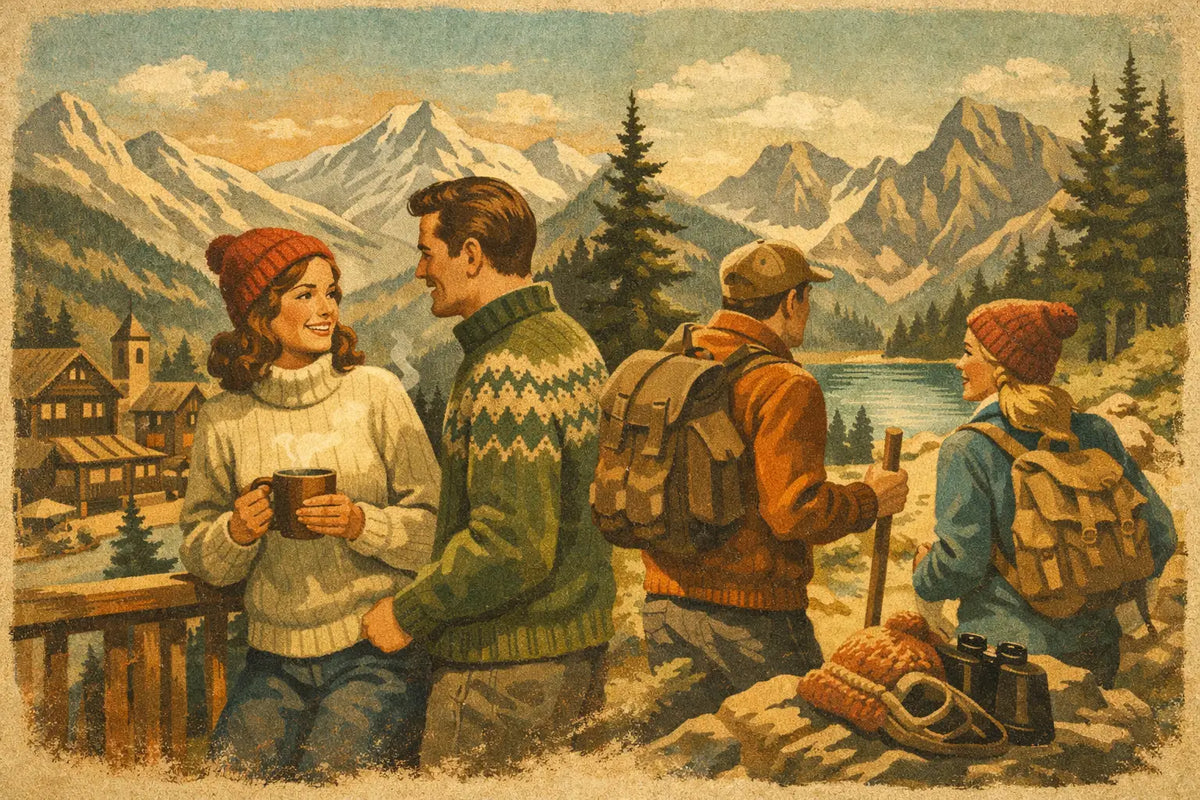
For campfires and cabin weekends, go chunky. A textured knit, shawl collar, or beefier cardigan brings that classic mountain-lodge energy without requiring a reservation at a ski resort. The key is to leave room for a thermal or tee beneath it. Campfire smoke finds everybody eventually, so choose something you will be happy wearing again after an airing-out session on the porch.
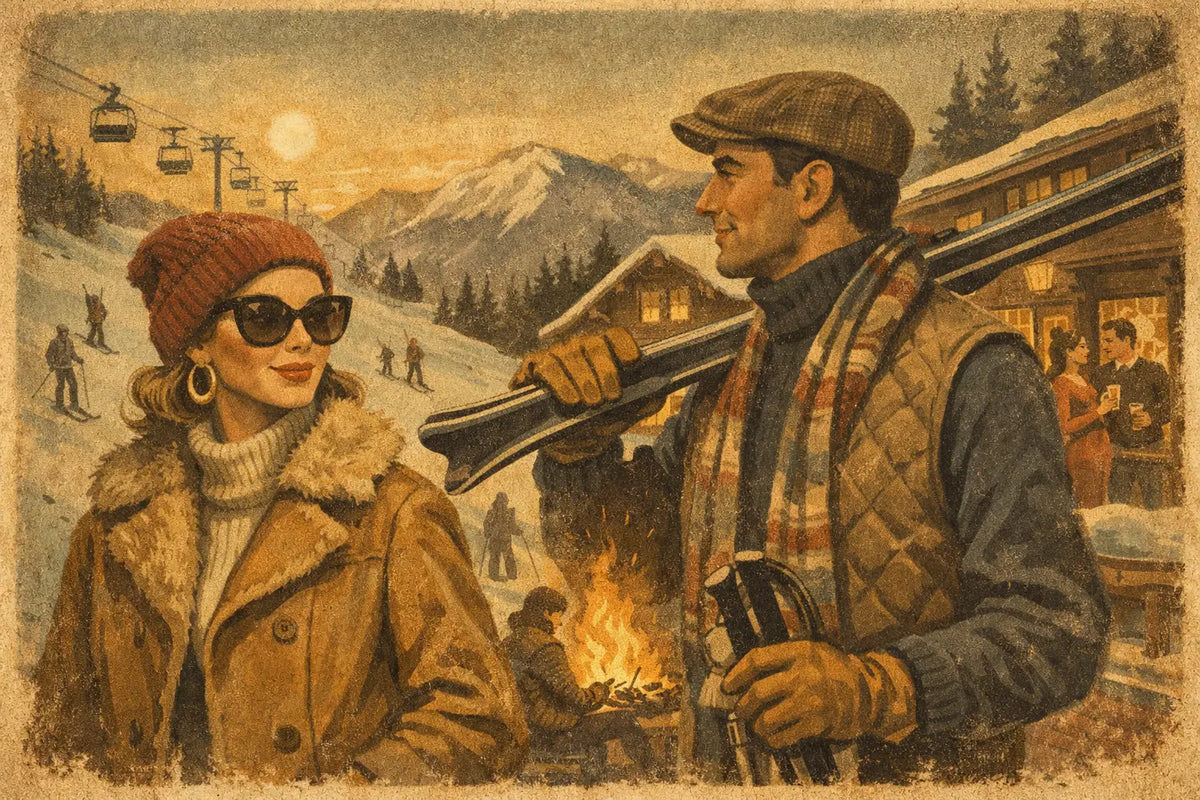
For ski-town laps between the lift, lunch, and late-afternoon sunshine, a sweater with a higher neck can be a smart call. A mock neck or quarter-zip style protects a little more of your neck and can vent easily when you heat up. It is not a substitute for a true midlayer on storm days, but it is a strong option when your plans are more social than technical.
Fit Is a Layering Strategy
A sweater can be warm, beautifully made, and still spend all winter shoved in a drawer if the fit is wrong. In mountain towns, layers are not a fashion afterthought. They are how you avoid carrying three jackets around because the temperature dropped 25 degrees before dinner.
A classic fit works best if you want a sweater that stands on its own indoors and slips beneath a shell outdoors. Look for shoulders that sit naturally, sleeves that reach your wrist without covering your hands, and enough room through the chest to wear a tee underneath.
An oversized fit brings a laid-back, borrowed-from-the-cabin vibe and leaves room for a base layer. It is excellent for lounging, road trips, and cold mornings with a mug in hand. Just remember that a huge sweater can bunch under a fitted jacket, so pair it with a roomy puffer, workwear-inspired coat, or vest.
Cropped sweaters can work beautifully with high-rise pants, bibs, or overalls, especially when you want a little color and shape in an otherwise practical outfit. For truly cold days, make sure the hem overlaps your waistband. The mountain breeze has a way of finding every gap.
Color Is Part of the Point
A mountain-town sweater does not have to be beige, gray, or “technical charcoal.” Those colors have their place, but so do rusty oranges, alpine blues, sunny yellows, forest greens, and patterns that look like they were dreamed up during a long chairlift ride.
Color makes practical sense, too. It is easier to find a bright layer in a messy gear pile, and a fun sweater can carry an outfit when the rest of your closet is built around dirt-friendly pants and old boots. Retro stripes, geometric patterns, and contrast trim add character without making you look like you are headed to a costume party.
If you prefer a quieter palette, choose one special detail: a textured stitch, a throwback patch, a bold collar, or an unexpected pop of color at the cuff. The goal is not to dress like everyone else’s idea of an outdoors person. The goal is to look like yourself while staying warm.
Details That Earn Their Closet Space
The best sweaters become repeat players because of small, useful details. Ribbed cuffs help keep sleeves from sliding into your coffee. A slightly longer back hem gives extra coverage when you bend over to leash the dog or unload the cooler. Reinforced elbows are a bonus if your weekends involve woodpiles, tailgates, or a lot of sitting on rocks.
A quarter zip adds flexibility and is worth considering if you tend to overheat while moving. Cardigans are excellent for temperature swings because you can open them up without pulling anything over your head. Crewnecks remain the easiest choice for almost everyone, especially if you want one sweater that works from October through spring.
Avoid buying a sweater solely because it is extra thick. Bulk is not always warmth, and a super-heavy knit may be awkward under outerwear or too hot indoors. A medium-weight sweater that layers well often gets more use than the giant one that only leaves the house twice a year.
How to Make Your Sweater Last Past One Season
Sweaters live longer when they get a little respect. Rotate them instead of wearing the same favorite every day, and give them a chance to air out between adventures. For wool, follow the care label closely and skip the dryer unless you are hoping to gift your sweater to a very small friend.
Pilling is normal, especially where backpack straps, seat belts, and jacket sleeves create friction. A fabric comb or sweater shaver can tidy things up quickly. Store knits folded rather than hanging whenever possible, since hangers can stretch out shoulders and turn a good fit into a sad, droopy situation.
The right mountain-town sweater should make it easier to say yes: yes to the patio when the sun is out, yes to the trail when the dog gets the zoomies, yes to one more lap around town before heading home. Find a layer that feels like your kind of fun, and wear it until it has a few good stories of its own. Have fun out there!

Leave a comment
This site is protected by hCaptcha and the hCaptcha Privacy Policy and Terms of Service apply.